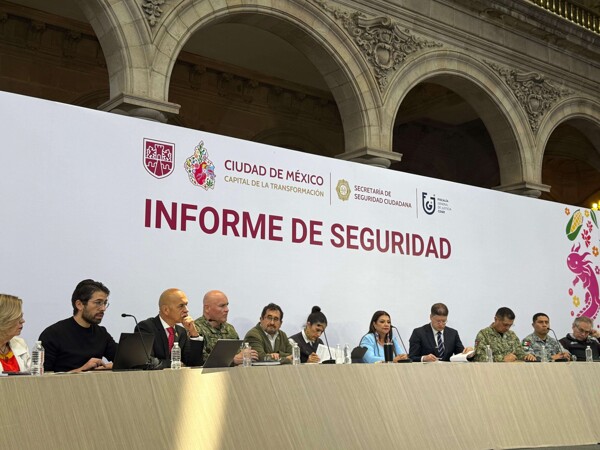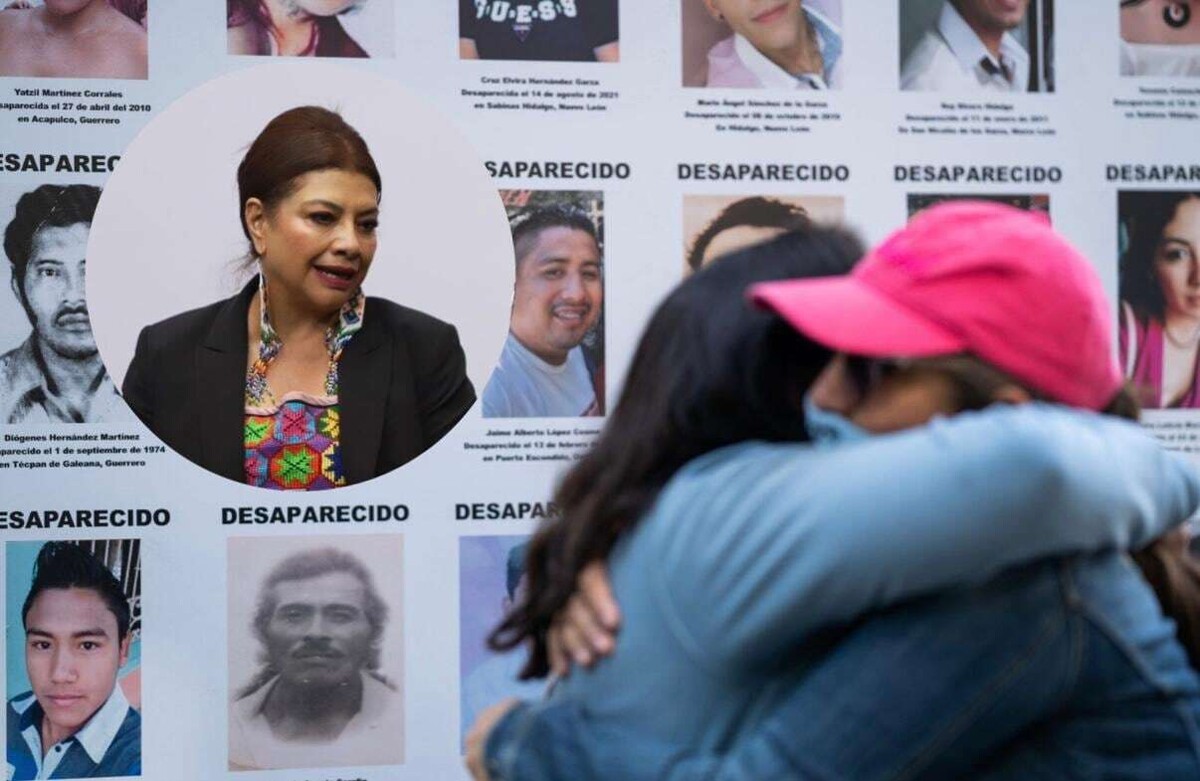
Despite actions implemented in recent years, the Committee noted that no substantial improvement is observed. Faced with this scenario, the Committee asked the General Assembly to consider technical, financial, and specialized support for Mexico, as well as the creation of effective mechanisms for the search for missing persons and the protection of victims and their families. Additionally, it emphasized that these crimes can also be perpetrated by non-state organizations when they form part of systematic attacks. The CED highlighted the severity of the crisis in Mexico, evidenced by thousands of cases of missing persons, the discovery of more than 4,500 clandestine graves, and tens of thousands of unidentified human remains. The Head of Government of Mexico City, Clara Brugada, launched strong criticisms against the report of the Committee on Enforced Disappearances, ensuring that the document presents technical inconsistencies, omits recent advances, and extrapolates data incorrectly. CDMX questions the Committee's methodology. The capital's head of state indicated that the committee's analysis—linked to the United Nations—“leaves much to be desired,” considering that it does not meet the necessary rigor to address such a delicate issue as disappearances. “The evaluation is based on data from 2009 to 2017, but they extrapolate that reality to 2025, which does not reflect what is currently happening,” Clara Brugada stated. Furthermore, she criticized that the body did not incorporate information provided by the Government of Mexico, which she qualified as “serious” and sufficient reason to question the reliability of the report. “One cannot trust an analysis without rigor.” The capital's head of state emphasized that the Mexican government has collaborated extensively with the committee, even allowing its entry into the country, something she said does not occur in other nations. “How can we have confidence in a work that must be very strict if it excludes the contributions of the government itself?” Clara Brugada also accused the document of lacking solid technical support and warned about the risk of politicizing the issue of disappearances. Government also disqualifies the report. Brugada's position coincides with that of the Secretariat of the Interior, which last Friday qualified the report as “tendentious and lacking legal rigor.” The federal agency indicated that the committee exceeds its mandate by improperly expanding the definition of enforced disappearance and omits the advances implemented since 2018 to combat this crime. CDMX boasts of advances in attention to missing persons. Faced with the criticisms, Brugada defended the actions undertaken in the capital, highlighting that attention to missing persons is a daily priority of her administration. Among the advances, she mentioned: the creation of a specialized cabinet that meets daily; the implementation of an integral center that concentrates all the involved dependencies; the progressive fulfillment of 20 commitments established as a work plan. “As never before, the issue is being addressed in the country and in the city,” Clara Brugada stated. Call to not politicize the issue. Finally, the Head of Government made a call to avoid the political use of the disappearance crisis and reiterated that her administration will continue to strengthen mechanisms, legal reforms, and institutional coordination. “We have many elements not to coincide with that report, but the most important is what we are doing,” she concluded. ONU alerts to disappearances in Mexico. The United Nations Committee on Enforced Disappearances (CED) requested the Secretary-General to urgently refer Mexico's situation to the General Assembly, with the objective of promoting international measures to strengthen the prevention, investigation, and punishment of this crime. In its resolution, the Committee warned that there are well-founded indications of enforced disappearances as crimes against humanity, by identifying patterns of widespread or systematic attacks against the civilian population in different regions of the country. However, it clarified that this procedure is preventive and does not seek to determine individual criminal responsibilities. The body indicated that, although there is no evidence of a federal policy to commit these crimes, it has received information pointing to the possible participation or acquiescence of public officials in some cases.